
![[LIVESTREAM] The Immigration Conversation: A voters guide to immigration platform and policies](https://images.squarespace-cdn.com/content/v1/5c55e43de8ba44b3f7ffaa7c/1600286675239-EYTTN08W2PBS7PLUXO6N/maxresdefault.jpg)
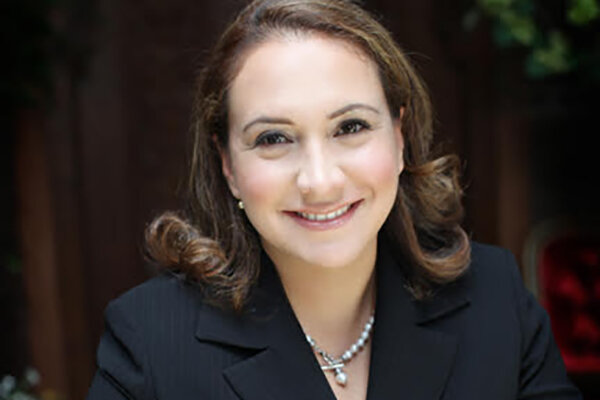

Alma Puente is an experienced immigration attorney in Southern California. The sole partner of The Law Offices of Alma D. Puente in El Monte, she began her career in immigration advocacy by joining the ranks of the Immigration & Naturalization Service (INS) at the U.S.-Mexico border at Calexico, California. The daughter of an immigrant mother, Alma came to understand at an early age the difficulties and challenges that immigrants face in the United States and she came to know that to enact real change she needed to learn U.S. bureaucracy from the inside. Eventually transferring to the Los Angeles District Office of Citizenship & Immigration Services (CIS), she completed her law degree while working for CIS. Because of her wide-array of professional experience, Alma is able to assist clients in all matters of immigration law from visas to naturalization handling green card renewals, adoptions, naturalization, deportation and removal proceedings, refugee/asylum matters, and more. Alma is a graduate of Chapman University and Loyola Law School, and we are honored to welcome her to the IRC Board.
Even as a 7 year old girl, Alma knew she would one day become an attorney. Her desire to study immigration law began as she got old enough to begin to really understand her mother’s painful experience as an immigrant. Her mother suffered deportations from the United States and was painfully separated from her husband before ultimately getting her waivers approved, and it branded Alma. Hearing her own mother recount those memories ignited a particular passion in Alma for pleading the cause of the immigrant. And it was with all of that in mind she made the difficult decision right after college to join the ranks of the Immigration & Naturalization Service (INS) at the U.S.-Mexico border at Calexico. It was, as she recalls it, an impossible choice. “I really felt like I needed to understand the agency from the inside out. [I thought] If I am going to fight this monster, I need to be inside its belly.” And so she did. Alma says her two years at the border were the hardest in her life emotionally and psychologically. Knowing well the heightened responsibility of being the child of an immigrant mother, she recalls seeking her mother’s blessing. “Gosh Mom, you were arrested by people doing the job I am thinking about taking.” Ultimately, though, Alma had her mother’s support because Alma made her goals crystal clear from the beginning. Her desire was to learn and to help. Still, she found herself in her early-twenties with a .40 caliber weapon on her hip, working for an entity she was morally and ethically opposed to. “Really, I got through it knowing this was going to be helpful,” she recalls.
Alma brings this experience to her law practice. In many ways, though, she feels that the work of immigration law has changed to an unimaginable degree since 2016. She says, “Before, I had this insider information and knowledge knowing there are things I can do, and I think my outlook was hopeful knowing we can do this. Now, though, we’ve done an about-face and I feel like a rookie all over again.” She laments the present reality in which she has a given set of facts knowing that, were the year 2014 and not 2020, the case would be a ‘slam-dunk.’ Because of the current government’s position and antagonistic tendencies, Alma says it is hard for her to confidently give clients assurance their case will go well – because she simply cannot be sure any longer. She says, “We are dealing with an entirely different DHS [Department of Homeland Security]. It’s not the DHS I worked for.” What brings her hope is the possibility that, with an upcoming election cycle, there is real opportunity to change immigration law statutorily and, at the very least, to end the abuse of discretion we see so often in the present-day. “That is what is getting me through: casting my vision toward November and even more toward January.”
“What would I say? ‘Please allow me to tell you a story’.”
As for her contributions to the IRC, Alma would love to expand both outreach and workshops as well as increase collaboration with pro bono attorneys to ensure as much public awareness and immigrant representation as possible. Because respondents in immigration proceedings are not constitutionally entitled to an attorney, and knowing that represented people are five times more likely to get some sort of relief, making sure the IRC is their utmost to lessen the gap of represented applicants in immigration court is a huge priority for Alma, certainly one of her goals.
Despite everything she has seen, she sees with “hopeful vision.” And with the possibility of a new Administration, Alma sees the possibility of comprehensive immigration reform – or certainly real, concrete steps toward it. “We’ve been casting our vision in that direction since 2001 with the extension of Section 245(i) of the Immigration and Nationality Act [allowing adjustment of status in the U.S. even if currently out of status], but we continue to come up short. Nothing has happened.” Much more, Alma laments the damage done by the disastrous 1996 law signed by President Clinton – the so-called Illegal Immigration Reform and Immigrant Responsibility Act of 1996 – often referred to as IIRIRA. Alma says that, “Since 1996 we have been looking, sort of hoping that those very restrictive bars that return people to their country will be done away with. Those restrictive ten-year bars present horrific situations for people.”
“It’s real life. It’s front-and-center. My constant prayer is for my clients, for the judges, for the consular officers looking over my clients’ cases. I pray for a sense of temperance and kindness and mercy that they would see I have tried to put forth my clients’ humanity.”
Ultimately, though, one can know the law inside and out but still not effectively move the needle on the conversation surrounding immigration locally or nationally. It takes all of us to do that. And while she does not seek out conversations she knows will be antagonistic with those utterly opposed to her life’s work, if a situation presents itself she will always engage seeing an opportunity to begin to change a hardened heart. “What would I say? ‘Please allow me to tell you a story’.” It is the humanity of a person’s story that does the hard work of changing the heart and mind of even the most hardened immigration opponent. When Alma finds herself disheartened or weary, she need not look far for encouragement. Her own contributions to the well-being of immigrants gives her strength to carry on, allowing her to see with hopeful vision.
One of her favorite cases was of a physician, a U.S. army veteran, who had been deployed several times during Operation Desert Storm. He lived the vast majority of his life thinking he was a U.S. citizen. He was born in Mexico, but both of his parents were U.S. citizens and when they brought him to the U.S., the immigration officer put a U.S. admission stamp on the back of his Mexican birth certificate. For his entire life in the U.S. until that point, this was sufficient. When it came time to retire, though, it became extremely problematic. He wanted to retire under the current Administration but was told he would be unable. Despite being able to get passports in the past, he could no longer. He sought out Alma’s services saying, “Here’s my problem. I’ve served my country. I’ve educated myself to the utmost. I am a medical doctor. But I have no proof of citizenship.” Thankfully, after a great deal of research, Alma was able to find a rarely known, rarely used exception allowing for non-citizen members of the military deployed during a period of conflict to get citizenship. “We were able to get this man a U.S. citizenship certificate. He’s now in his sixties and, really, if we were not able to do this for him he would have been deported.”
“I really felt like I needed to understand the agency from the inside out. [I thought] If I am going to fight this monster, I need to be inside its belly.”
Earlier this year, Alma sat on the panel for a documentary film screening of “Status Pending,” hosted by the Immigration Resource Center and the Center for Racial Reconciliation at Fellowship. Claudia’s story is featured in the film, and Alma thinks of Claudia’s plight and what her struggle has been with her two daughters while her husband is stuck in Mexico. “When you think what these girls who are U.S. citizens are going through, it’s just heartbreaking. Their lives are ruined. They sometimes live in their car – and here was a man trying to do everything right.” The system is deeply unfair.
How does Alma do it day after day? “Sometimes all I have, I just hang onto the cloak of Jesus. I pray for my clients every day.” Yes, there is a great deal of emotional fatigue associated with immigration advocacy. Still, Alma says you simply cannot forget that people like Claudia are struggling. “It’s real life. It’s front-and-center. My constant prayer is for my clients, for the judges, for the consular officers looking over my clients’ cases. I pray for a sense of temperance and kindness and mercy that they would see I have tried to put forth my clients’ humanity.”
Immigrants and their advocates have, particularly in this most recent season, been put in impossible situations. “We have to do everything we can. These are human beings.”
We are grateful for Alma’s experience and all she brings to our work. We celebrate her contributions to the future of the Immigration Resource Center. Join us in welcoming her!
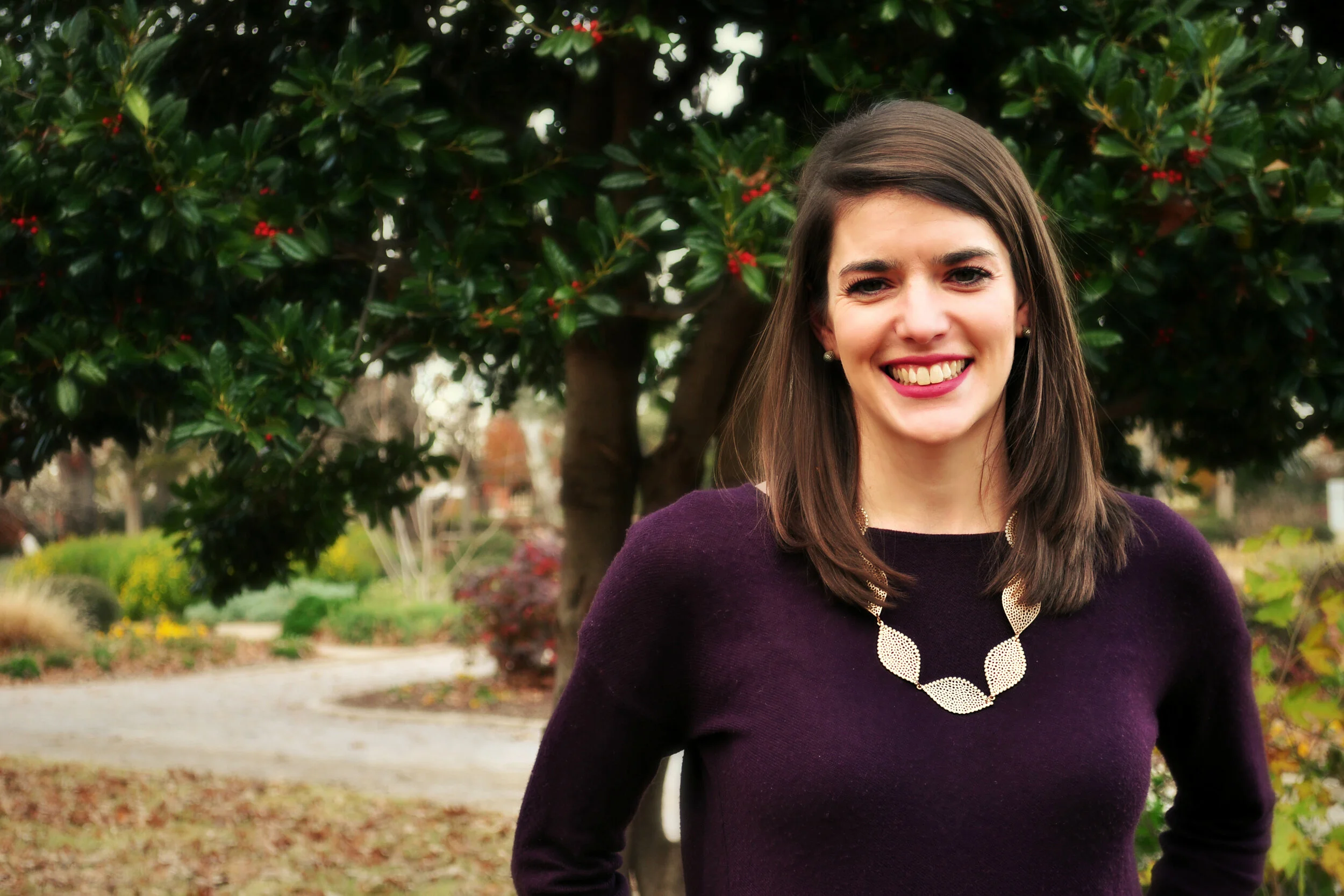

Erin Cox is a public policy professional and strategist with extensive experience in local government. A Policy Manager for the Los Angeles Homeless Services Authority, Erin specializes in issues surrounding family homelessness and homelessness prevention, immigration, and gender and race equity. Erin is a graduate of Southern Nazarene University and the Trachtenberg School of Public Policy and Public Administration at George Washington University, and we are honored to welcome her to the IRC Board.
The daughter of a pastor in suburban Dallas, Erin grew up immersed in the rich complexity of a bilingual congregation as their church merged with another. Recognizing the reality that as a child the distinction between citizen and non-citizen was blurred and not immediately obvious, through relationships with friends, her youth group, and connections to church families she gained deeply personal insight into the complicated realities of many immigrant families.
While an undergraduate at Southern Nazarene University in Bethany, Oklahoma, Erin was exposed to the insidious nature of family separation and deportation within her congregation there. She recalls an undocumented mother being involved in a minor motor vehicle accident, who was then reported to authorities and ultimately deported leaving her husband and U.S.-born children behind. Being proximal to such familial destruction left its mark on Erin. A veil had been lifted as she experienced tremendous dissonance between the bizarre and impersonal machinations of the U.S. immigration system and its failure to align with values Americans espouse as a country of family and opportunity. The rippling effects were many, and Erin attributes this experience as well as a study-abroad experience in Latin America as formative to her pathway to policy work.
“People are caught up in a complicated system and a complicated narrative. When I was young I often heard you needed to do things ‘the right way’ and ‘get in line.’ But even then I had a sense this wasn’t true. We are a land of immigrants.”
Now an accomplished public policy professional with the Los Angeles Homeless Services Authority, her previous work includes federal workforce development analysis for the Baltimore City Department of Social Services, immigration policy research for the City of Baltimore and the Migration Policy Institute as well as teaching Public Policy at the American Studies Program in Washington, D.C. She hopes her wide array of experience serves the IRCSGV to strategically approach big picture questions the organization is wrestling with, as she also seeks to explore what could be possible through not-yet-considered partnerships given her connections to and knowledge of the local government landscape. Forging partnerships is a passion of Erin’s. Recognizing the work she has been able to do to make services more accessible and coordinated for people experiencing homelessness, she sees a similar level of support needed for the immigrant community and hopes to bring that about.
Erin understands her call as one of fixing broken systems to better serve the people who too often go unseen and uncared for by those in positions of power, or worse, actively oppose a vulnerable people group’s flourishing. Though she initially thought she would go on to do international development and relief work, she came to a realization that much could be done on important policy issues in her own country. Her experience in her younger years taught her that immigration could be a divisive issue, but her education afforded her a framework for policy problems. She says that, “People are caught up in a complicated system and a complicated narrative. When I was young I often heard you needed to do things ‘the right way’ and ‘get in line.’ But even then I had a sense this wasn’t true. We are a land of immigrants.”
“To be effective in my work, I am often trying to take a different approach of humanizing people and seeking to understand what is at the root of people’s positions and why they hold the positions that they do.”
Navigating a complex and divisive political landscape requires Erin to truly see and elevate the humanity in everyone, which she recognizes is a substantially harder posture for people to take. It is easier to scapegoat, and plenty do. She says, “I try to start from a place of curiosity. There are drivers and motivators behind everything. If I can understand what is behind the politics you are putting forward, then I at least have a fighting chance for figuring out a strategy for how to make change.”
For Erin, her faith has informed how she views human beings. Politics and policy issues have a tendency to exacerbate the general instinct to categorize people. Countering that, she says “To be effective in my work, I am often trying to take a different approach of humanizing people and seeking to understand what is at the root of people’s positions and why they hold the positions that they do.” The first step to better understanding is the recognition of a person’s humanity. This is necessary for policy to ultimately create systemic change. And as a person of faith, she does not see government as a one-size-fits-all solution. Government has a critical role to play, as does the faith community, and both are needed to drive real change.
Even in this polarizing cultural moment, Erin sees great opportunity in bringing people together – even people who strongly disagree. This moment requires relationship-building and the forging of common language and understanding. “Bringing people together just for the sake of learning about different experiences has some value on its own, but where I see the greatest opportunity for real change is in creating spaces for dialogue that can begin from a place of recognizing common core values, and then move from there to graciously articulate and understand where differences emerge. Those are the conversations and spaces that give me hope.”
“I try to start from a place of curiosity. There are drivers and motivators behind everything. If I can understand what is behind the politics you are putting forward, then I at least have a fighting chance for figuring out a strategy for how to make change.”
And now, of course, a full-circle moment. Though she at one time considered pursuing immigration law, Erin landed on policy work to serve and empower marginalized communities insisting on the real possibility of social change.
We are thrilled for all Erin brings to the table and celebrate her contributions to the future of the Immigration Resource Center. Join us in welcoming her!


How do you approach charitable giving?
I have a principle that if I volunteer with a nonprofit, I need to give back to them and their cause. The majority of causes I am involved with are as diverse as Los Angeles itself.
I approach charitable giving with the goal that funds directly impact people. Ideally, I partner with groups that engage their communities in tangible, concrete ways. It’s my hope that by being a discerning donor I can make the biggest impact with the funds I have to share.
“The only way I know to reach hearts on this topic is to share our family’s story from an open heart space.”
Why the IRC?
It all started with an invitation from Rob and Jordan Boldt to the IRC Gala in 2018. They knew immigration was an area of concern for my husband and I. By the end of the gala I remember standing there – just crying – thinking this is absolutely where I need to be contributing. I had expected a lot of fanfare, as is often the case at other galas. To my surprise, the event was markedly grassroots. The food and wine were terrific to be sure. But beyond the lovely food, I heard my husband’s story that night. His family immigrated from South America in the 80s. I heard the echo of my husband’s life as I heard stories of similar heartache. The combination of logistical obstacles and emotional trauma are as real today as they were then. I marveled at the toughness of my neighbors who endure the migrant’s road! I also thought back on my own childhood experiences. I was gob-smacked hearing “Zig” Ziglar, a favorite motivational speaker from my youth, who celebrated immigrant lives for the ways they have made this country a better, more beautiful place for us all. Then and there I started to think about what I could give. For me, it was a call of sorts; to participate more actively in a cause that is woven into the fabric of my family’s DNA.
How do you discuss immigration when outside the IRC community?
In practice, to discuss immigration fully, there has to be some consideration of how it has become a politically divisive issue. It is a straw man for so many politicians who want to incite intense emotion within their base. Unfortunately, the humanity of immigrant lives and communities dissolves for the sake of scoring cheap political points. But those realities have not hindered us from sharing with trusted friends and colleagues.
Our chosen mode is through hospitality. The Gala models for us what it means to invite others into conversation. We do our best work over dinner and wine! Casual dinners to formal ones, our table has become a place for sharing unbelievable immigration stories. We have discovered that many feel as we do about this important issue. Within the safety of friendship we have found allies in this work. Sometimes these conversations are introductions to the work of the IRC. Other times they are strategy sessions for the work yet to come. And at times, neighbors have trusted us with serious needs of their own. In the end, the only way I know to reach hearts on this topic and to cut through the political noise it generates, is to share our family’s story from an open heart space.
“It’s my hope that by being a discerning donor I can make the biggest impact with the funds I have to share.”
How else do you respond to immigration opponents?
It’s been my experience that people’s judgments around this issue are typically founded in fear. Such anxiety induces a cognitive fight or flight response. Remaining level-headed even when I vehemently disagree means that I can respect their terror and fright, their questions and apprehensions. It’s also quite helpful to understand what has informed their opinion. So long as immigration remains an abstract topic that comes and goes with every passing news cycle, public opinion will remain disconnected, and fail to see the dignity of immigrants as real people.
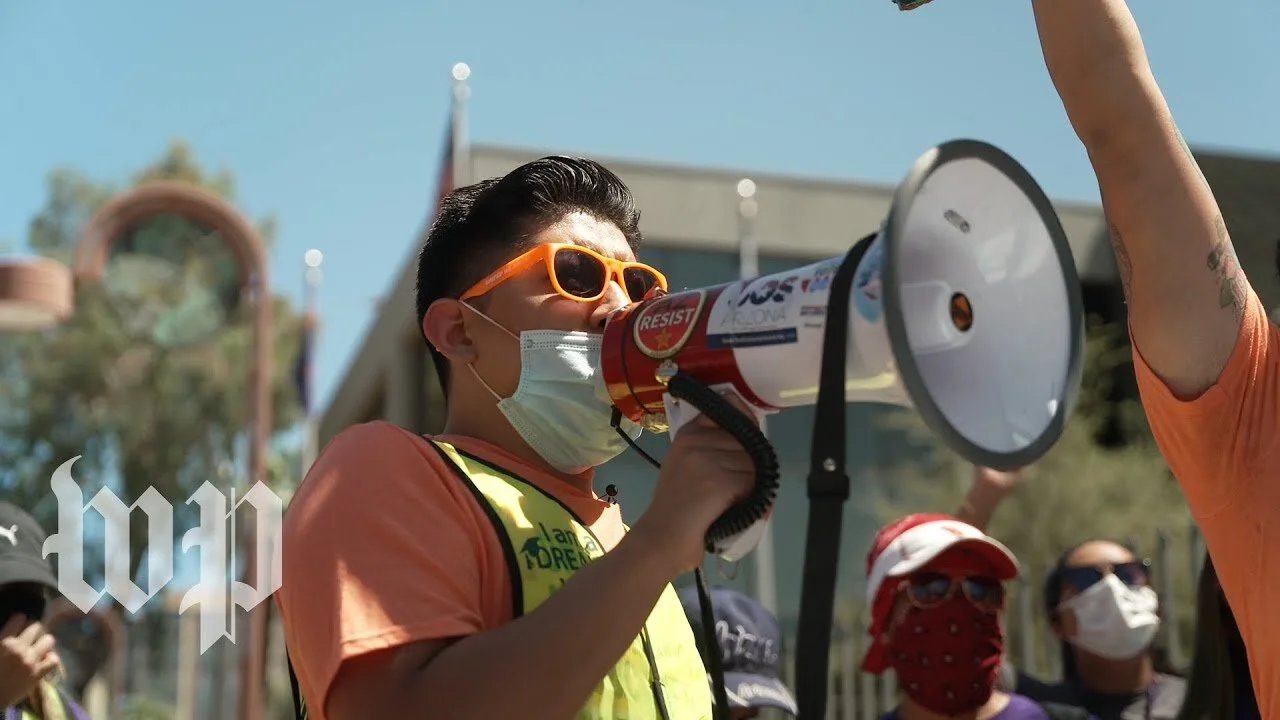
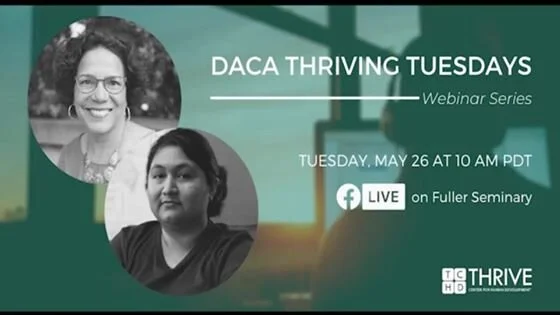
Former IRC Board Member Norma Ramirez and current Ph.D. candidate in Clinical Psychology at Fuller Theological Seminary is hosting DACA Thriving Tuesdays, a webinar series of The Thrive Center for Human Development at Fuller Theological Seminary. Tune in weekly at 10a via Facebook Live from May 26, 2020 through June 23, 2020 for self-care tips and resources for undocumented individuals with or without DACA. For additional resources, Norma has released free self-care, mental health resources to foster thriving and resilience: https://thethrivecenter.org/resources/multidimensional-identities-of-the-undoc-generation/?fbclid=IwAR3-q6qoSFhdeEJ3lFBqn2-dvFz2eqOSz_5dPRwfplb_b3GVeYaBJ3hW744


Teresa has been living in the San Gabriel Valley for decades. She is undocumented and the IRC is helping her apply for for immigration relief due to a violent crime she endured. Teresa and her four children face many struggles.
Teresa's 20-year-long domestic violence marriage was suddenly halted last year when Teresa's husband left the state without a trace. With his absence, the abuse halted, but so did household income. Teresa has been a stay at home mother for her four children, one of whom has a disability and requires constant caregiving.
Teresa's oldest son was providing for the family until COVID-19 hit. Then his hours were cut, then his job altogether. He is not eligible for unemployment insurance. The family did not receive stimulus checks. Before the pandemic, Teresa described her family's favorite activities: going to the park, dancing baile folklorico, and going to the movies: they take joy in being together. Now Teresa is worried about getting food on her table and not being evicted. She told the IRC legal team what keeps her going during these hard times are her children. She fights for them daily. She has survived much hardship before and will survive this pandemic.
However, undocumented families desperately need financial support. Thankfully, the IRC was chosen to be a funnel for special emergency grants through the County of Los Angeles and the California Community Foundation for our immigrant neighbors in response to the COVID-19 pandemic. We were able to redistribute $2,000 to Teresa's family for direct financial relief. It is a small dent in the bills and missed rent piling up, but it brings comfort in the midst of uncertainty. Teresa's appreciation culminated in a phrase we hear from clients often,
"Que Dios le bendiga mucho por su trabajo."
May God bless you for your work.
We are mutually transformed by our work. We exist to serve alongside the immigrant community in their fight for justice and humanization. We empathize, not sympathize, with our clients, meaning we feel their pain.
During the pandemic and civil uprising, we are all feeling stretched, but we cannot stand idly by. Thank you for supporting our work and for supporting positive change in the lives of Teresa and her children, and so many others.
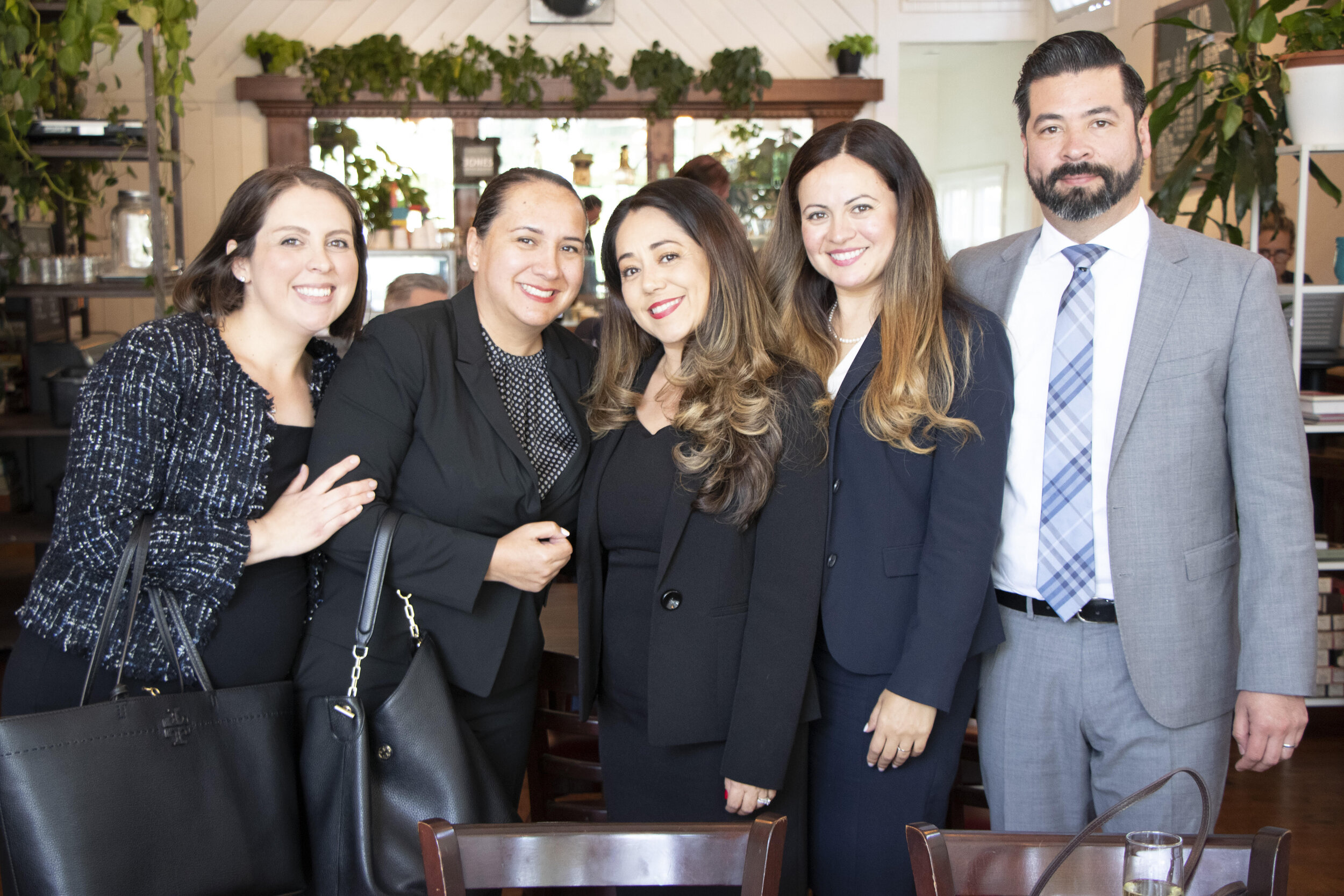

On Friday, the Immigration Resource Center of San Gabriel Valley and The Center for Racial Reconciliation at Fellowship hosted an exclusive online screening of “Status Pending,” a new documentary short film, along with a panel featuring the film’s producer-director Priscilla González Sainz and the lawyers she followed in her documentary. The Immigration Resource Center’s director of legal services, Jonathan Fung and immigration activist Dr. Alexia Salvatierra also participated on the panel.
“Status Pending” primarily offers a look into the lives of five incredibly hardworking immigration lawyers in Southern California: Araceli G. Guerrero, Jose Osorio, Alma D. Puente, Gladdys J. Uribe, and Elizabeth Uribe. Each of these attorneys began their own individual practices after finishing law school and now work tirelessly to assist their clients in gaining legal residence in the United States. Despite their practices being scattered across the state, the group remains a tightly-knit support system through constant online communication and occasional in-person meetups.
“Status Pending” excels at demonstrating the intense, almost paradoxical extremes that persist throughout immigration lawyers’ lives. They have the difficult job of balancing short-term crisis management with long-term problem-solving. The strength of this very special cadre of Mexican-american attorneys is cleverly represented throughout the film via text-message animations.
At times, hopelessness strikes the lawyers as they experience repeated setbacks and defeats, including sudden policy changes and chaos set in motion by a single tweet by the US President. Each admits to occasionally being tempted to quit and move to a career that doesn't’ cause them so much pain. Yet they always bounce back from moments of frustration to find a sense of hope for the future –– hope that policies and laws will favorably change, that clients will reunite with their families, that their actions can actively make the world a better place. This exhausting cycle of hope and hopelessness makes the lawyers’ work unenviable and all the more admirable.
González Sainz also paints a brief yet vivid portrait of the people that the lawyers represent. Over the course of only 26 minutes, we see one longtime U.S. resident successfully gain citizenship, while another is placed in detention for so long that he ultimately opts to leave the country. One of the most heartbreaking details from this case: is when the client’s lawyer must advise the man’s son and daughter to pack him a suitcase because he won’t be able to return home in the foreseeable future. Examination of the clients' cases in the film highlights the inefficiency of the United States’ immigration system, as the process to obtain legal residence took many clients over 20 years to complete.
The filmmaker panel revealed a number of intriguing insights into the project. González Sainz explained that she was initially inspired to shoot the film following the 2016 election, as anti-immigrant policies and sentiment increased throughout the country. González Sainz witnessed the inspiring work of her sister, attorney Araceli G. Guerrero, and decided to tell the story of Guerrero and her colleagues. Since each of the lawyers is first-generation Mexican-American, González Sainz saw the unique opportunity to depict first-generation professionals and their immense impact on California’s immigrant communities.
Without fail, each attorney cited their parents as primary inspirations for pursuing immigration law and for participating in the documentary. Elizabeth Uribe explained, “I chose this career to be able to continue lending a helping hand to those that come after me.” Gladdys J. Uribe expressed a similar sentiment, saying, “the person sitting across from us could be our parents however many years ago.”
“Status Pending,” which was funded through the Tribeca Film Institute’s If/Then Short Documentary Program and the National Association of Latino Independent Producers, will continue screening at film festivals throughout the summer. After that, González Sainz hopes to arrange a wide release for the film. If you find the opportunity to watch it, I strongly recommend this film –– it’s a beautifully eye-opening tribute to underappreciated public servants and the people they help.
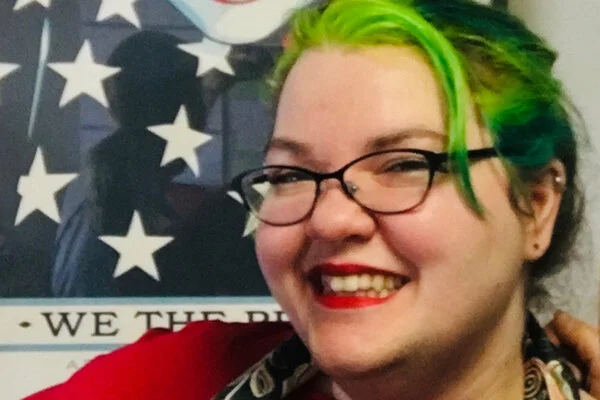

Featured as part of our Donor Profile Series, Bonnie James explains why she gives to the work of the IRC. Read her interview below:
Monthly donations like Bonnie’s allow the IRC to ensure low-cost immigration legal aid services in the San Gabriel Valley and beyond, as well as educational events and connections to local community resources. For as little as $25/month you can underwrite the cost of legal services for one immigrant family. Become a monthly donor today!
Q: Can you tell us more about how you and your husband approach your giving?
My husband and I grew up in church settings and were taught about tithing and how that kind of giving helps fund community outreach. My husband gave 10% of his earnings to charities the moment he began his first job at age fourteen. We think of budgeting for donations as equally important as budgeting for our bills, because we know the value that organizations like the IRC add to the world.
Q: What would you say to younger donors who have student debt and feel they can't give?
If there is an organization that you believe in and want to give to, such as IRC, it’s okay to start with giving a small amount, like five dollars a month. I have also found in non-profit work, there is always work to be done. If you really can’t afford to donate money, see if there is volunteer work you could do. A gift of time can be just as valuable as a monetary gift.
Q: What’s the emotional component to donating for you?
I grew up in a home where domestic violence was present. I know what it feels like to need help and not know who is safe to ask for that help. I am fortunate enough to be in a position now where I can give financially, and I want to pay things forward so that people are not left without the help they need. I can’t help everyone in all the ways I want to, so it’s immensely gratifying knowing my donations help do work in areas I want to see improvements made – like immigration support.
Q. Your method for choosing how you give is really creative! How do you decide who to give to regularly?
We’ve decided to tier our giving at local, national and international levels. We look for how the money is being spent. Online resources disclose budgets and senior staff pay, but we also check on how the organization engages with its target audience. In cases like domestic violence where anonymity is required, it can be a little less transparent, but generally we monitor how an organization engages with the community it serves. Small organizations like the IRC are so great because just about everything goes to the causes and people they help.